to co-ordinate and fulfill activities and processes required to provide and manage services on an agreed level
to manage the technology to support the service
Scope
The scope includes:
The service itself
The service management process
The technology
The people
Event Management
An event is an occurrence that affects the IT infrastructure management or the provision of an IT service
Event management surveys all events that occur in the IT infrastructure in order to monitor the regular performance, and which can be automated to trace and escalate unforeseen circumstances
Activities
An event taking place
Event reporting
Event detection
Event filtering
The event significance or classification
Event correlation
Trigger
Reaction possibilities
Action assessment
Close event
Incident Management
The incident management process focuses on restoring failures of services as quickly as possible so that it has a minimal impact on the business.
Incidents can be failures, questions or queries
Includes any event that interrupts a service, so include events reported by customers, either by the service desk or through various tools
Incident Management Steps
Identifying
Recording/ logging
Classifying
Prioritizing
Initial diagnosing
Escalating
Researching and diagnosing
Resolving and restoring
closing
Request Fulfillment
The process of service request handling, where a separate process is utilized that initiates the need for a request
It concerns small changes that initially pass through the service desk
Standard forms are used to resolve incidents, problems or known errors
Goals
Offering users a channel where they can request and receive standard services
There must be an agreed approval and qualification process
Provide information to customers about the availability of services and the procedure
Provide standard services components like licenses and software media
Assisting with general information, complaints or remarks
Problem Management
It engages in analyzing and resolving the causes of incidents
It develops proactive activities to prevent current and future incidents using known error sub process
Diagnosis of the underlying cause of incidents and its resolution
Reactive Problem Management
Detection
Logging
Classifying
Prioritizing
Researching and diagnosing
Determine workarounds
Identifying a known error
Finding a resolution
Closing
Reviewing major problems
Access Management
The process of allowing authorized users access to use a service
Ensure that this access is always available at agreed times
A service request through the help desk can initiate access management
Activities
Verification
Assigning rights
Monitoring of the ID status
Recording and tracing access
Removing or restricting rights
Other Operational Activities
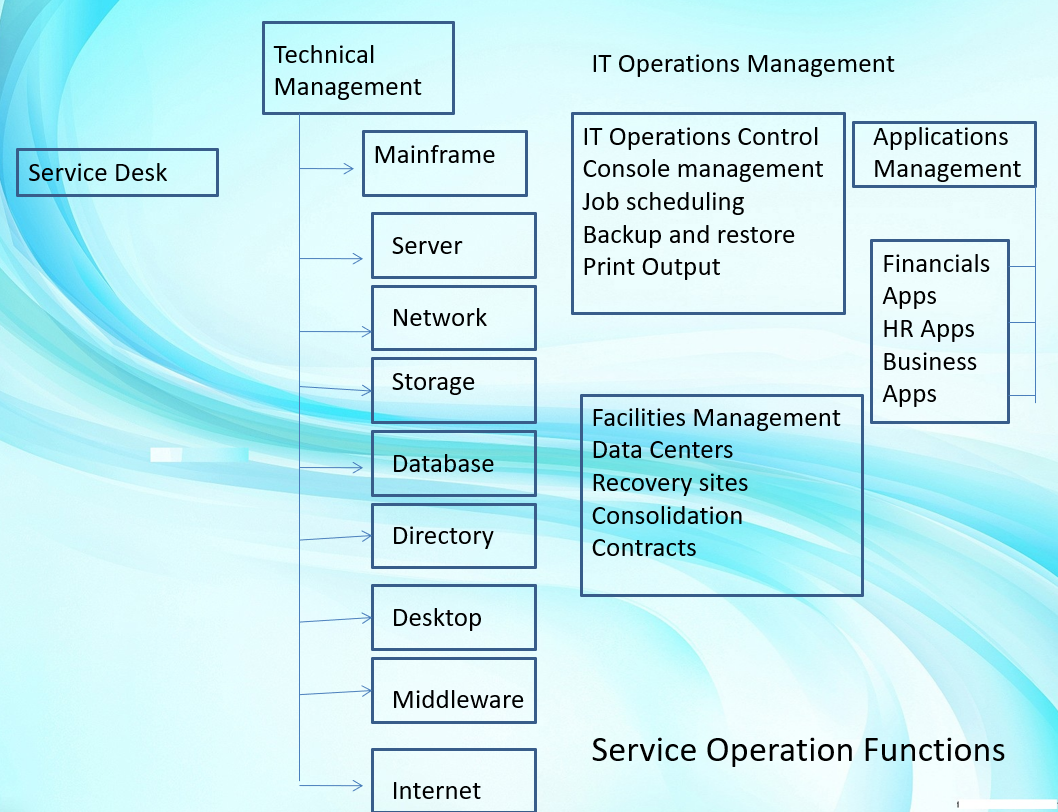
Mainframe management
Server management and support
Network management
Storage and archiving
Database management
Directory services management
Desktop support
Middleware support
Internet / web management
Service Desk
A functional unit with a number of staff members who deal with a variety of service events
Requests may come in through phone calls, or the internet
The prime contact point for IT users
It processes all incidents and service requests
Use software tools to record and manage events
Advantages
Improved customer service, perception and increased customer satisfaction
Increased accessibility due to single contact
Requests are resolved better and faster
Improves cooperation and communication
Improves focus and proactive service
Improved use of resources for IT support
IT Operations Management
The function that is responsible for performing the day to day operational activities.
Responsible for implementing performance standards defined earlier
Adds value to the business
Objectives
Maintaining the existing situation to achieve stability in the processes
Continual research and improvement to achieve better service at lower cost
Application of operational skills to analyze operational failures and to resolve them
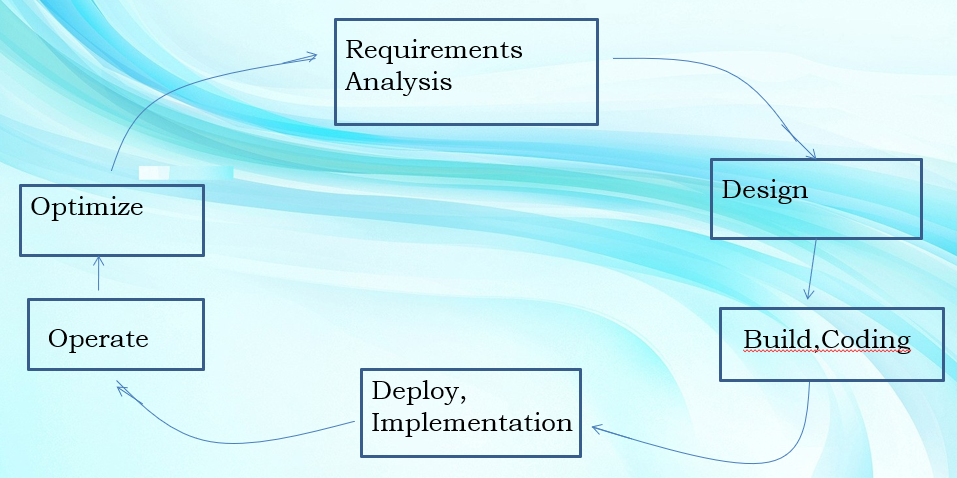
Application Management Lifecycle
Continual Service Improvement
The goal is the continual improvement of the effectiveness and efficiency of IT services, meeting business requirements better
By achieving and surpassing the objectives, effectiveness, at the lowest cost
Reduce the number of errors in a process
Measurement
Process compliance- Does the organization follow the new /modified service management processes and does it use the new tools?
Quality – Do the various process activities meet their goals?
Performance – How efficient is the process? What are the elapsed time?
Business value of a process – Does the process make a difference? How does the client rate the process?
Objectives
To measure and analyze achievements with the SLA
To recommend improvements in all phases
To introduce activities which will increase the quality, efficiency, effectiveness and customer satisfaction
To operate more cost effective IT services
To use quality management methods
CSI (Continual service improvement) & Organizational Change – John P. Kotter (Prof of Leadership)
Create a sense of urgency
Form a leading coalition
Create a vision with SMART goals
Communicate the vision
Each stakeholder must know what is the vision is, what is its use for him.
Empower others to act on the vision
Remove obstacles
Setting clear goals and self confidence
Plan for and create quick wins
evaluate per service /per process what can be improved rapidly, plan this, execute it and communicate it
Consolidate improvements and create more changes
If people and processes are continually improving themselves
Institutionalize the changes
Hire experience on best practices in IT
Hand out clear procedures
Train IT staff
Match goals with changing demands
Integrate new IT solutions and processes
P – D – C – A Cycle by Dr W Edwards Deming (American statistician)
Plan – what needs to happen, who will do what and how
Do – execute the plan
Check – whether the activities yield the desired result
Act – adjust the plan in accordance to the checks
Plan CSI
Determine the scope
Requirements, set goals, gap analysis
Define action points, check points
Interface between CSI and the rest of the cycle
Set management roles and responsibilities
Tools needed to support and document processes
Select methods and techniques to measure effectiveness
Implement CSI (Do)
Determine the budget
Document roles and responsibilities
Determine CSI policy, procedures and communicate and training
Supply monitoring, analysis and reporting tools
Check CSI
Monitor, measure and evaluate
Report on accomplishments with regards to plan
Evaluate the documentation
Perform process assessments and audits
Formulate proposals for process improvement
Adjust CSI – (Act)
Introduce the improvements
Adjust the policy, procedures, roles and responsibilities
The Continual Cycle – 6 phases
Determine the vision – goals and objectives of the business
The current situation
Determine measurable targets
Plan – a service improvement plan
Check – measure if the objectives were met
Assure - engrain the changes in order to maintain them
CSI Service Improvement Process – 7 steps
What should you measure
What can you measure
Gather the data (measure)
Process data
Analyze data
Present and Use the information
Implement corrective action
CSI Manager
Successful introduction and awareness of CSI
Allocating CSI roles
Identifying and presenting improvement opportunities